



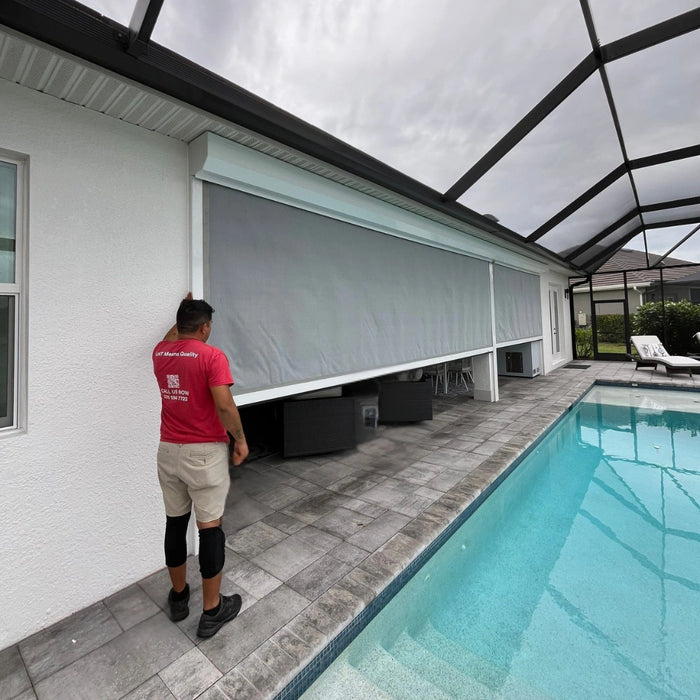


Mosquito and Solar Screens with ClipZip by Plastex: What the Clips Do for Your Lanai Screen
by Eduardo Roman on Oct 30, 2024If you've seen the name ClipZip on a quote or while reading about retractable screens, here's what it means. ClipZip by Plastex is the adjustable clip system that sits in the side guides of our retractable mosquito and solar screens. The fabric's edges carry a zipper that runs inside those guides, and the ClipZip clips hold that zipped edge under tension, so the screen stays smooth and flat in its guides instead of sagging. The screen itself is still a mosquito and solar screen: a comfort product that keeps out insects and cuts sun and glare, not hurricane or storm protection. For storms, see our hurricane screens, a separate product. Lead time for mosquito and solar screens is typically 3 to 4 weeks, and most installations finish within a few hours once fabrication is complete.
What ClipZip is
ClipZip is made by Plastex SA of Madonna del Piano, Ticino, Switzerland. Plastex was founded in 1949 and extrudes and molds thermoplastic polymers for the automotive, electronics, railway, construction and sun protection sectors. ClipZip is its product for zip screens: small clips, molded from a thermoplastic, that attach to the side guide. We're Advanced Hurricane Technology, a Fort Myers manufacturer founded in 1994, and ClipZip is the clip system we use in the retractable mosquito and solar screens we install.
Here's how a zip screen works. The screen fabric has a zipper along each side edge, and when the screen is down those zipped edges run inside the side guides. The ClipZip clips sit inside the guide and press on the zipped edge. Plastex calls them adjustable force clips for zip screen guides: they hold the fabric under tension so it stays smooth, and installers position them at different distances along the guide to spread the tension for the width of the screen. Plastex says that tension can be corrected directly on site, during installation. In a 2023 trade article written by Plastex, the company adds that the side guide carries markings for the clip spacing. Plastex describes the system as developed from an exclusive patent and as compatible with the aluminum systems of most leading sun protection manufacturers.
These are the figures Plastex publishes for the clips. They describe the clip component, not our installed screen.
- Certified for 4,000 UV hours under EN ISO 4892-2:2021.
- Certified for temperatures from -25°C to +85°C, which is -13°F to +185°F.
- Tested for 500,000 cycles, which Plastex describes in that 2023 article as about five movements an hour for ten years.
- REACH and RoHS compliant, two European rules on chemicals and hazardous substances in products.
- UL94 V2, a flammability classification for plastic parts.
Plastex's own description is on its ClipZip page. Figures Plastex doesn't publish aren't in this article, and we don't add ratings of our own.

What that means on your lanai
Day to day, the clips do one job you'll notice: the fabric edge stays in the guide and the fabric stays flat across the opening instead of sagging. And if the tension ever needs correcting, Plastex's design lets an installer adjust the clips in place.
Keep the clip's job separate from the fabric's job. The clips hold the fabric; they don't keep out bugs or cut the sun. Insect mesh keeps mosquitoes and other insects out while letting air through. Solar fabric cuts sun and glare while keeping a view outside. Which fabric belongs on which opening is the subject of our guide to solar screens vs insect screens for a Southwest Florida lanai, which also covers no-see-ums, privacy and prices.
Choosing the fabric, the operation and the colors
There's a short list to settle, one opening at a time.
- Fabric. Mosquito and insect mesh, or solar fabric that cuts sun and glare. Each opening gets its own screen, so a west wall that bakes after lunch can get solar fabric while the rest gets insect mesh.
- Operation. A manual spring retractable screen that you raise and lower by hand, or a motorized screen that you run with a remote control or a wall switch.
- Track and housing color. Beige, Ivory, White or Bronze.
- Screen and webbing color. Beige, Ivory, White, Black or Grey.
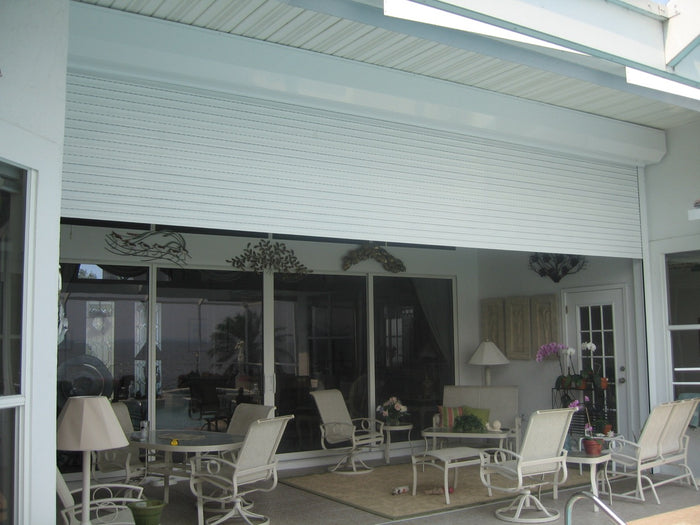
Every screen rolls into a housing at the top and runs in side guides, which is where the ClipZip clips live.

What these screens are not: storm protection
Mosquito and solar screens are comfort products. They're not hurricane, storm or impact protection, and they don't replace shutters or hurricane screens. The FAQ on our product page puts it plainly: they're designed for comfort and sun control, not storm protection. That's also why you won't find wind figures in this article.
If you want storm protection for the same openings, that's a separate product with its own warranty, lead time and price: our hurricane screens, which typically take 40 to 60 days from measure to installation. Mosquito and solar screens typically take 3 to 4 weeks. You can ask about both at the same free in-home visit.

What ClipZip screens cost, with the warranty and lead time
These are 2026 installed price ranges for our mosquito and solar screens, from the pricing behind the instant estimate on our free in-home visit page and the same ranges as our solar vs insect guide. Each runs from a manual screen at the low end to a motorized one at the high end.
| Opening | Insect screen | Solar screen |
|---|---|---|
| One window or sliding glass door, up to 8 by 8 feet | about $1,600 to $3,400 | about $2,200 to $4,500 |
| One lanai bay, 12 by 9 feet | about $2,600 to $5,400 | about $3,500 to $7,300 |
These ranges are before any permit, access or removal fees, and your price is confirmed at the free in-home measure. For wider openings and what moves the price, see the solar vs insect guide.
Under AHT's Limited Warranty, bug screen and solar screen carry a 1-year term, and the written Limited Warranty controls. If a screen ever needs attention, you can request service or repair from our team.
Lead time is typically 3 to 4 weeks from the measure, a range rather than a promised date.
Products in this article

Mosquito and Solar ScreensRetractable insect and sun screens for lanais. Comfort products, not storm protection.
To see the fabrics, colors and operating options, look through our mosquito and solar screen options. Then book the free in-home visit: we measure each opening, help you choose the fabric for each one, and confirm your price in person. That page also has our instant estimate. Or call us at (239) 251-0856, Monday to Friday, 7:30 am to 4:00 pm.
Advanced Hurricane Technology · FL Lic. CBC1258522 | SCC131153977


