









Florida Windstorm Insurance Discounts: How Hurricane Protection May Lower Your Premium
by Eduardo Roman on Oct 27, 2026Most searches for a Florida windstorm insurance discount for hurricane shutters start with a renewal notice. The premium went up again, a neighbor mentioned a wind mitigation credit, and now you want to know whether the shutters, screens or impact windows on your home can help. The honest answer is that they may, but the path runs through a specific state inspection form, a set of opening protection classes, and your own insurance provider's underwriting. This guide explains how the Florida wind mitigation inspection works, which types of hurricane protection may qualify, how to document what is on your home, and what to realistically expect. Advanced Hurricane Technology has been manufacturing hurricane protection in Fort Myers since 1994, so we will keep the jargon to a minimum.
What the Florida Wind Mitigation Inspection Actually Is
Florida's wind mitigation inspection is recorded on the Uniform Mitigation Verification Inspection Form, OIR-B1-1802. The Florida CFO identifies revision 04/26 as required for new inspections beginning April 1, 2026. Insurers use the recorded features when evaluating available mitigation credits.
The inspection is short. A qualified, licensed inspector walks the home, looks in the attic, photographs what they find, and records nine sections on the current form:
- Building code
- Region
- Roof slope
- Roof covering
- Roof deck attachment
- Roof-to-wall attachment
- Roof geometry
- Sealed roof deck / secondary water resistance
- Opening protection
Hurricane shutters, screens and impact windows live in that last section, the one a homeowner can change without touching the roof. The inspector does not decide your discount. They record what is on the house, sign the form, and hand it to you to submit to your insurance provider, who applies their own underwriting. A completed form is valid for up to five years when there have been no material changes to the structure and no inaccuracies in the report; ask your insurer whether updated documentation is needed for your home.
Opening Protection Classes and Which Products May Qualify
The opening protection section asks a blunt question: what is the weakest form of windborne debris protection on the structure? The inspector works through every opening type, from windows and glazed doors to garage doors, skylights and glass block, and assigns the home a class based on the least-protected opening. In general terms:
- A and B: verified impact/pressure protection at the test levels specified by the form, with separate treatment of glazed and non-glazed openings.
- Other classifications: the form also distinguishes verified qualifying plywood, other pressure-rated protection, unverified protection, unprotected openings and damaged protection.
The inspector applies the current form's exact criteria. A product name alone does not establish the home's classification.
AHT products that may qualify
What matters is not the word shutter but whether the specific product on your home carries a current Florida Product Approval or Miami-Dade Notice of Acceptance for large missile impact and cyclic pressure, and was installed the way that approval requires. These AHT product lines may qualify when the installed model carries that approval. Ask your insurance provider to confirm how they treat each one.
- Impact windows and doors: the protection is built into the opening, so there is nothing to deploy. Impact glazing tested to the large missile standard is the most straightforward path to a verified opening.
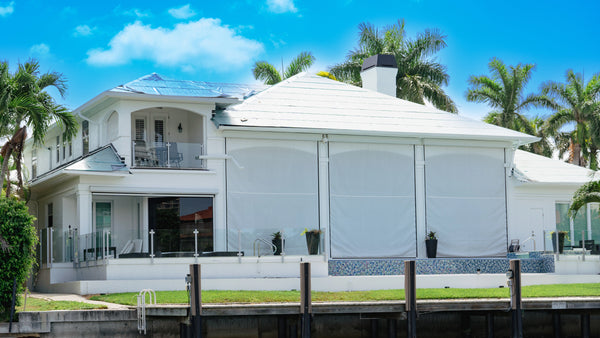
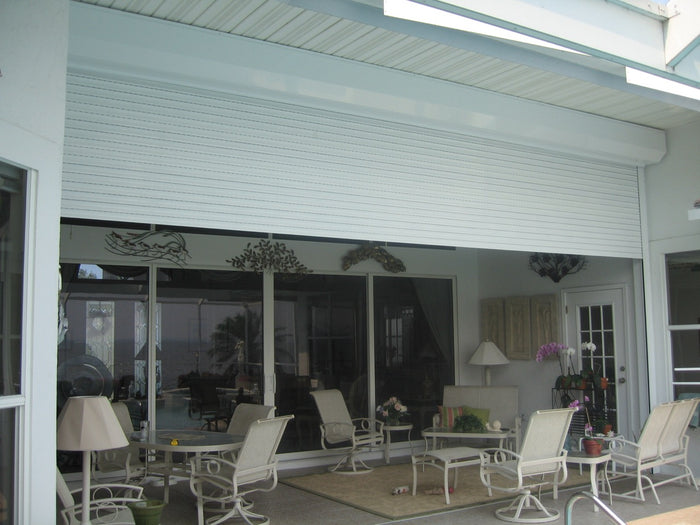
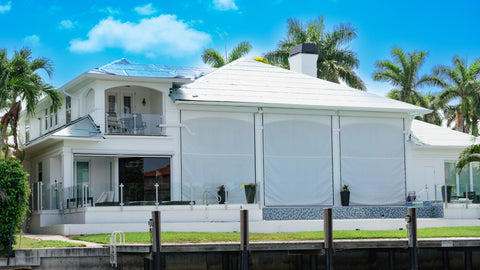
- Roll-down shutters: permanently mounted aluminum shutters that close by motor or crank, and a common way to bring lanai openings, sliders and large windows up to a verified class.
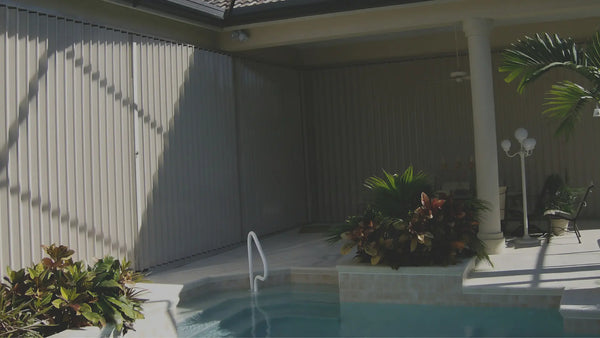
- Accordion shutters: permanently mounted and closed by hand, and a popular way to cover many windows at once.
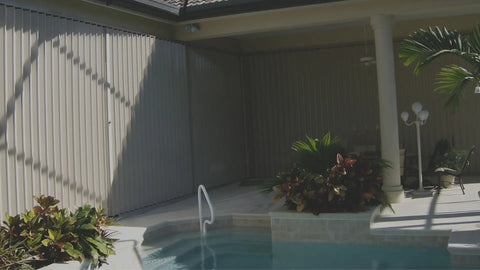
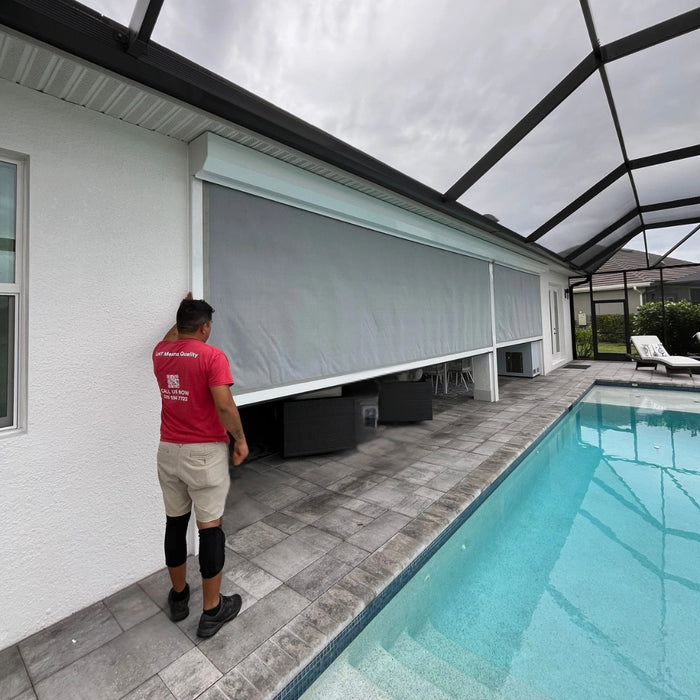
- Hurricane screens: fabric systems that cover an entire lanai or pool cage opening. A hurricane screen tested and approved for large missile impact is a different product from an insect or solar screen, and it is the one that may count. Our screens versus accordion comparison explains where each fits.
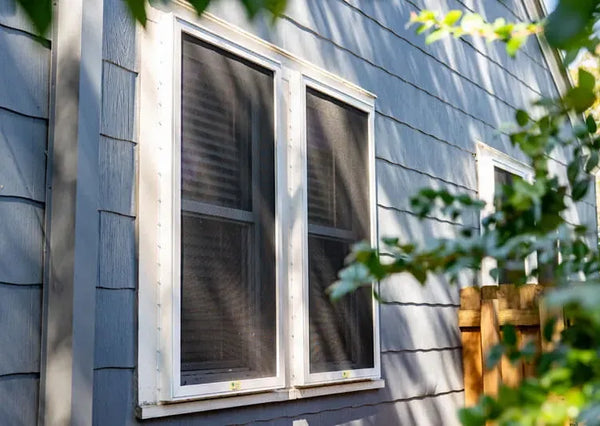
What generally does not count: insect screens, solar screens, untested window film, decorative shutters that do not close, and any product with no approval document. If it cannot be verified, the inspector records it as unverified, however sturdy it looks.
How to Document Your Protection and File With Your Insurer
The homeowner moves the paperwork. This sequence avoids the common headaches.
- Assess the whole house. List windows, doors, garage doors and skylights. Ask your insurer and a qualified inspector how existing coverage, gaps or damaged protection affect the classification. An inspection can help identify what needs attention before you choose upgrades.
- Collect the product paperwork. Keep the contract or invoice showing product and model, the Florida Product Approval number or Miami-Dade NOA for each product, and your permit and final inspection records. AHT provides the approval numbers for everything we install, so ask your estimator to include them.
- Photograph everything. Take clear photos of each opening with the protection installed, plus close-ups of any labels or stamps. Inspectors include photos with the form, and your own set speeds their job.
- Schedule a new wind mitigation inspection. An older form on file still shows the old opening protection, so a fresh OIR-B1-1802 after installation is what updates the record.
- Submit the form to your insurance provider. Send the signed form and photos to your agent or insurer and ask them to confirm in writing what was applied and when it takes effect. If something was not applied, ask why; it is often a missing document rather than a rejection.
- Keep copies and note the date. Store the form with your closing documents and note when it may need renewing. If you shop for a new policy later, the same form travels with you.
Setting realistic expectations
- Opening protection is one of the nine sections on the current form. The roof sections carry a lot of weight, and a strong roof plus Class A openings reads very differently to an underwriter than only one of the two.
- Every insurer applies credits under its own rules and rates, so two neighbors with identical shutters can see different results.
- Partial protection may not qualify for the full opening-protection credit; ask your insurer how the inspector's classification applies to your policy.
- Premiums move for many reasons, so a credit may show up as a smaller increase rather than a visible drop.
- Only your insurance provider can tell you what your policy will do. We can tell you exactly what is on your house and hand you the documents to prove it.
Frequently Asked Questions
Do hurricane shutters qualify for a Florida windstorm insurance discount?
They may. Shutters tested and approved for large missile impact and cyclic pressure, installed on every opening and documented on an OIR-B1-1802 form, can move a home into a verified opening protection class. Whether that changes your premium is up to your insurance provider, so ask them to confirm before you count on it.
Do I need a new wind mitigation inspection after installing shutters or impact windows?
In almost every case, yes. The form on file describes the house as it was on the day of that inspection, and a new one is how the upgraded protection gets recorded. Ask your insurance provider what they need to see.
Who can perform a wind mitigation inspection in Florida?
The form lists who may sign it, generally including licensed home inspectors with the required training, licensed general, building and residential contractors, engineers, architects, and certified building code inspectors. Ask any inspector to confirm they are qualified to complete it.
Do hurricane screens count as opening protection?
They may, when the specific screen system has been tested and approved to the large missile impact standards and installed according to that approval. Insect and solar screens are not hurricane protection and do not count. Ask us for the approval documents for the screen on your quote, and ask your insurance provider how they treat fabric systems.
What if only some of my windows are protected?
The report documents the opening types and their protection. If you are upgrading in stages, ask your insurer and qualified inspector which gaps matter for the available credits before choosing the next part of the project. Do not assume a mostly protected home receives the same credit as a fully qualifying one.
The fastest way to get a clear answer about your own home is a walkthrough. Advanced Hurricane Technology is family-owned, has manufactured hurricane protection in Fort Myers since 1994, and installs with our own crews, never subcontractors, across Collier, Lee, Charlotte, Sarasota, Manatee and the Tampa Bay counties. We also service and repair all brands, so we can look at older shutters you are not sure about. Meet with an AHT shutter expert and we will walk every opening with you, show you the product approvals for anything we recommend, and leave you with the documentation your inspector and insurance provider will ask for. Wind mitigation guidance is part of every free consultation. Call (239) 251-0856 or book online.


