





Hurricane Screens vs. Accordion Shutters: Which Is Right for Your SWFL Home?
by Eduardo Roman on Oct 15, 2026If you are comparing hurricane screens vs accordion shutters for your Southwest Florida home, you are looking at two of the most popular ways to protect an opening from wind-borne debris. Both are made in our Fort Myers plant, both are installed by our own crews, and both do the job they are rated for. Where they differ is in how they look, how they deploy, and how they fit your budget. This guide compares operation, visibility and insurance eligibility, then matches each product to the situations where it makes the most sense, so you can decide opening by opening.
Hurricane Screens vs. Accordion Shutters at a Glance
| Feature | Hurricane Screens | Accordion Shutters |
|---|---|---|
| Deploy speed | Motorized options operate from a remote or wall switch; deployment time depends on the opening and system | Slide and lock the panels by hand; no motor or electrical power is required |
| Visibility and view | Rolls out of sight when not in use; the deployed mesh still lets in daylight and keeps a filtered view | Panels stay stacked at the edges of the opening year-round; closed shutters block the view and most daylight |
| Insurance-credit eligibility | May qualify for a windstorm mitigation credit when the product is impact-rated and every opening is protected; ask your insurer to confirm | May qualify for a windstorm mitigation credit under the same conditions; ask your insurer to confirm |
Hurricane Screens: A Closer Look
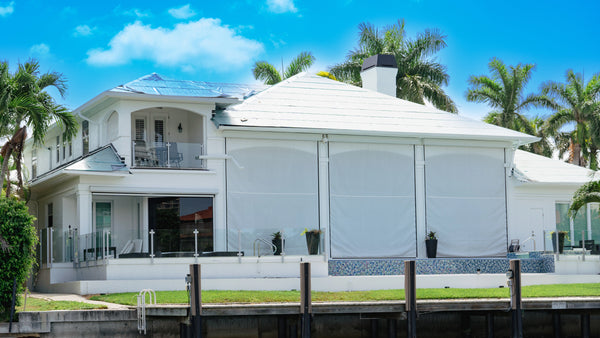
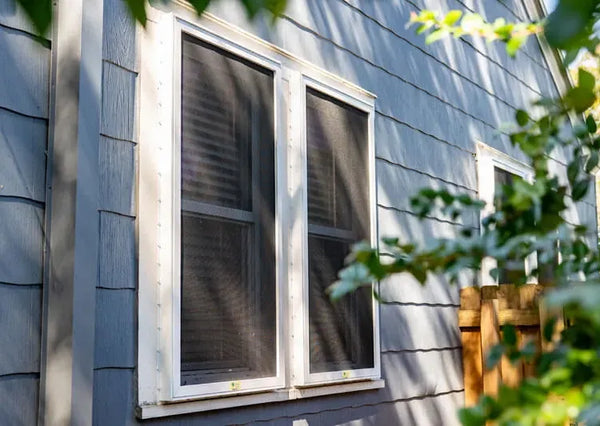
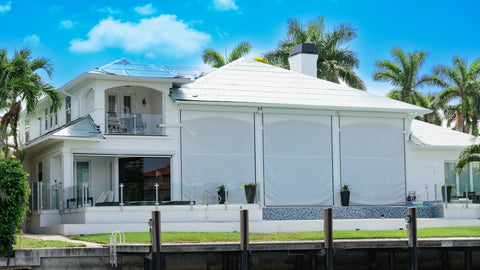
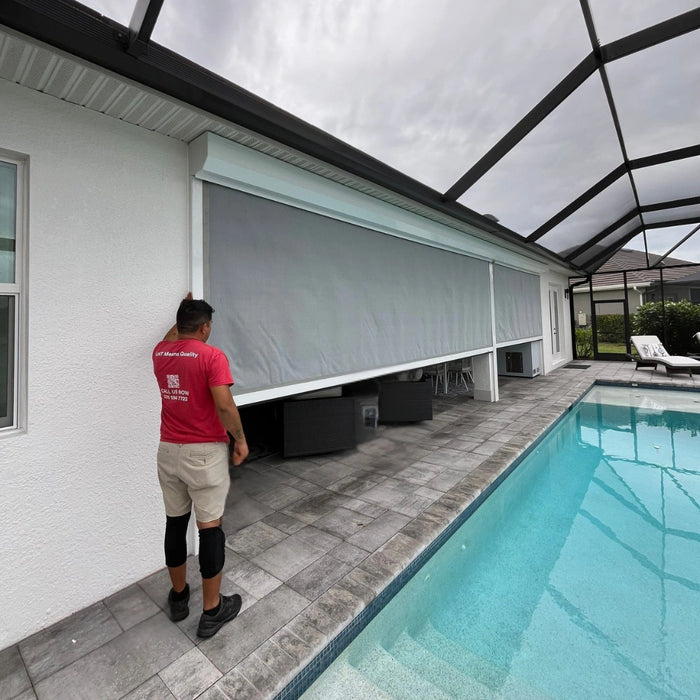
A hurricane screen uses high-strength woven fabric in a guided system engineered for the opening. AHT offers aramid and polypropylene fabric options, with manual and motorized systems depending on the application. Select the exact rated product, dimensions and installation details for your home. Retractable systems store the fabric above the opening when not in use.
Our hurricane-screen options include motorized systems operated from a remote or wall switch, as well as manual options. Fabric and installation warranty terms vary by material, color and component. Review the written warranty terms for your quoted system.
Where screens shine:
- Lanais, pool cages and covered patios with wide spans that would otherwise need several rigid sections
- Homes where the owner wants the protection to disappear between storms
- Waterfront and view lots where blocking the outlook, even briefly, is a real cost
Things to weigh:
- Fabric, visibility and operation differ from a solid shutter; compare the proposed material and system in person
- Motorized options need suitable power, so electrical work may be part of the project
- Screen fabric and solid shutters provide different views when deployed; neither description means the opening is watertight
Accordion Shutters: A Closer Look
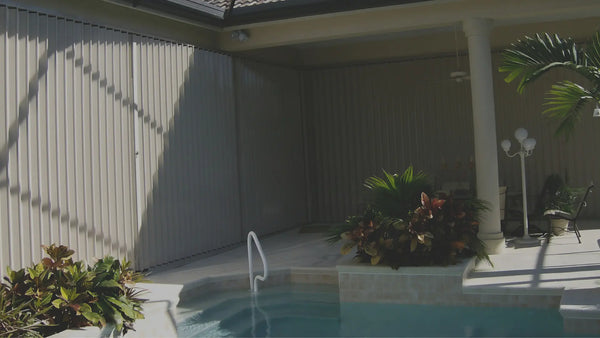
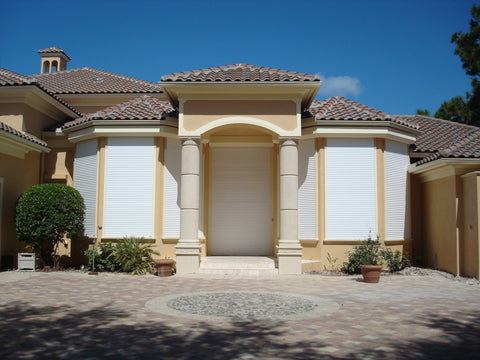
An accordion shutter is a set of interlocking aluminum blades that hang from a track above the opening and ride in a track below it. The blades stack against the sides of the opening when open. To deploy, you slide the two halves toward the center, engage the center closure and lock it. Because the shutter is permanently mounted and fully mechanical, there is nothing to carry, nothing to store and no motor to power.
Our accordion shutters are built in our Fort Myers plant and installed by our own crews, never subcontractors. We measure and specify the system for each opening, including the blade grade, locks and mounting details.
Where accordions shine:
- Windows, entry doors and sliders where the goal is solid, manually operated protection
- Seasonal residents who want to lock up in an afternoon without power or help
- Homes with many openings where consistent manual operation is a priority
Things to weigh:
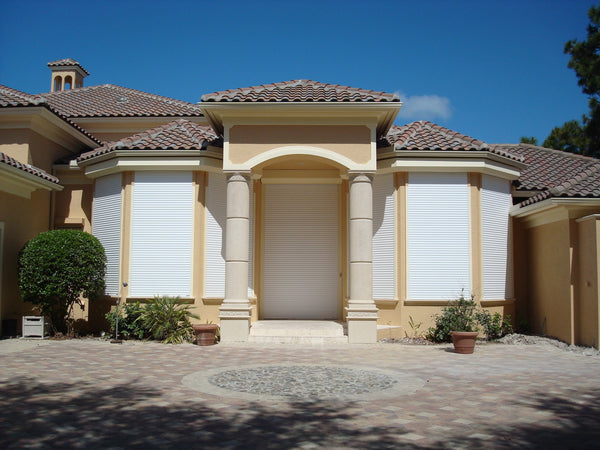
- The stacked panels are visible beside each opening all year, which some HOAs and homeowners prefer to avoid on the front of the house
- Closed shutters darken the room, so an extended closure during a power outage can feel confining
- Tracks and locks need a seasonal cleaning and lubrication so they slide freely when it counts; our service and repair team does this on every brand
Which Should You Choose?
Neither product wins across the board. The right answer usually comes from looking at each opening on its own. Here are three situations we see every week in Collier, Lee, Charlotte, Sarasota, Manatee and Tampa Bay homes.
Scenario 1: A large lanai opening
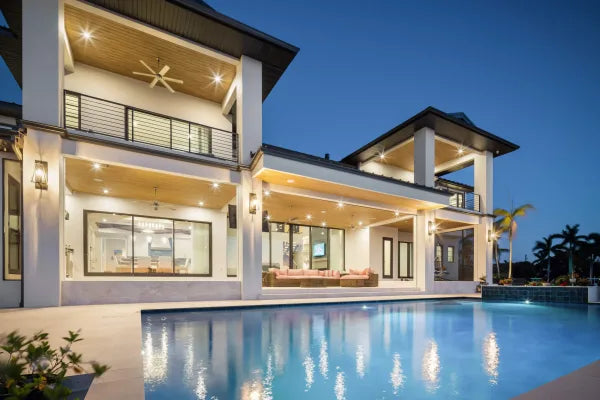
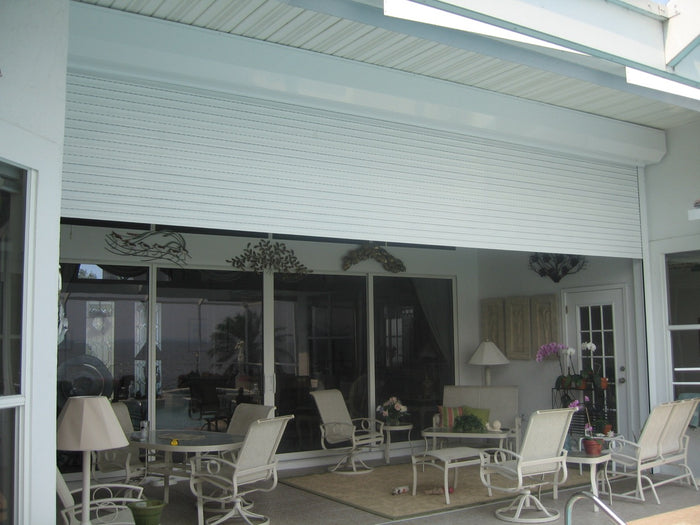
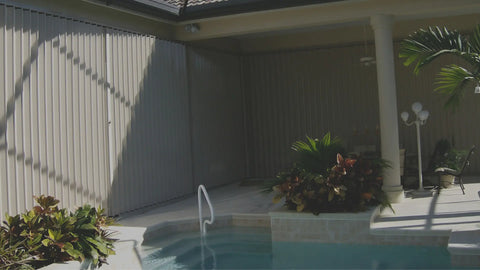
A screened lanai with a wide, tall opening facing the pool is the classic hurricane screen job. A single motorized screen can cover a span that would otherwise need several accordion sections and intermediate posts, and it rolls out of sight the rest of the year so the lanai stays open and bright. Accordions can work here, but the stacked panels and posts change the look of the space, so most homeowners lean toward a screen for this opening even when they use accordions everywhere else.
Scenario 2: Manually operated window protection
Accordion shutters can be a practical whole-house option when you want solid panels operated by hand. Deployment requires no motor power, and the panels remain mounted beside the opening. Hurricane screens can also protect windows, while motorized convenience may be particularly useful on a large lanai opening.
Scenario 3: An HOA aesthetic requirement
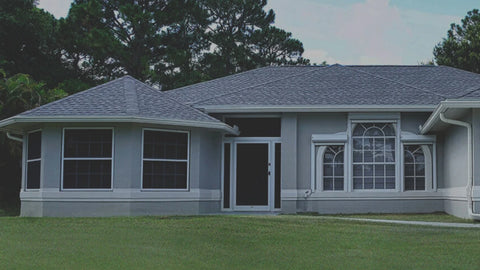
Many Southwest Florida communities restrict what can be visible on the street-facing side of a home when there is no storm. Because a hurricane screen retracts completely into its housing, which can be finished to match the trim and tucked under a soffit or above a door frame, it is often the easier product to get approved for front elevations. Accordions remain a good fit for side and rear openings, or for communities that allow stacked panels. Bring your HOA guidelines to the consultation and we will design around them.
A mixed approach is common: screens on the lanai and the front elevation, accordions on remaining windows and doors. You can also compare roll-down shutters when you prefer a rigid curtain that stores above the opening. The best choice depends on each opening, your preferred operation and the finished appearance.
Frequently Asked Questions
Are hurricane screens as strong as accordion shutters?
Compare the exact rated system for your opening, including its permitted dimensions, design pressures and installation requirements. Hurricane screens and accordion shutters protect through different assemblies; a product name alone does not establish the rating for your home. Your AHT expert can explain the approval for each proposed opening.
Do hurricane screens or accordion shutters qualify for an insurance discount?
Either product may qualify for a windstorm mitigation credit when it is impact-rated and every opening on the home is protected. Insurers verify this with a wind mitigation inspection, and the credit depends on your policy and carrier, so ask your insurer to confirm before you count on it. Our post on Florida windstorm insurance discounts explains how the inspection works.
Which is faster to deploy before a storm?
Motorized screens let you operate the specified system from a remote or wall switch. Accordions are moved and locked by hand and do not need electrical power. The useful choice depends on your opening sizes, access, controls and backup arrangements; ask to see how each proposed system operates.
Can I mix hurricane screens and accordion shutters on the same house?
Yes, and many homeowners do. A common layout is a motorized screen on the lanai and accordion shutters on the windows and doors. Because AHT builds and installs both, one AHT team can coordinate the protection for your whole home. We service and repair both systems along with every other brand.
Advanced Hurricane Technology has been family-owned and manufacturing in Fort Myers since 1994, and we install what we build with our own crews, no subcontractors. If you are still deciding between hurricane screens vs accordion shutters, a useful next step is to have us measure your openings and explain how each system would fit. Meet with an AHT shutter expert or call (239) 251-0856 and we will walk through every opening with you.


